At Central Borne, we understand food hygiene as a fundamental aspect of food services in schools and educational centers. Maintaining proper cleaning and food handling protocols not only helps guarantee food safety, but also ensures high-quality meals in safe and healthy environments for students.
Kitchen hygiene rules are essential in any space where food is prepared, especially in collective kitchens and school cafeterias, where meals are prepared daily for a large number of people. Correctly applying these measures helps prevent contamination, preserve food properly, and reduce potential health risks.
In addition, good kitchen hygiene also conveys trust, professionalism, and commitment to the wellbeing of users.
Food Safety and Current Regulations in School Cafeterias
Currently, school cafeterias must comply with increasingly demanding protocols related to hygiene, nutritional quality, and food safety. The new regulatory framework established by Royal Decree 315/2025 reinforces the importance of offering healthy, safe menus supervised by specialized professionals.
This regulation places special emphasis on aspects such as:
- Temperature control and food preservation.
- Proper food handling.
- Reduction of ultra-processed foods.
- Incorporation of fresh, seasonal, and balanced products.
- Adaptation of menus for allergies, intolerances, or specific dietary needs.
- Nutritional supervision of school menus.
- Continuous training for kitchen and cafeteria staff.
In addition, the decree reinforces the need to maintain strict hygiene and cleaning protocols to guarantee student safety and prevent food-related risks in educational centers.
Why Are Kitchen Hygiene Rules Important?
The main objective of food hygiene is to ensure that food is prepared, stored, and served under optimal conditions. Poor handling or insufficient cleaning can encourage the appearance of bacteria, cross-contamination, or food poisoning.
In the school environment, where nutrition is part of the daily routine of children and young people, following strict protocols becomes even more important. For this reason, professional kitchens must operate under specific controls for cleaning, preservation, and food handling.
Correctly applying hygiene rules helps to:
- Guarantee food safety.
- Prevent cross-contamination.
- Maintain food quality.
- Prevent food poisoning or health problems.
- Improve kitchen organization and operations.
- Build trust among families and educational centers.
Hygiene must be part of every process, from receiving products to the final meal service.
Main Hygiene Rules in the Kitchen
There are different basic measures that should be applied daily in any professional kitchen or school cafeteria to ensure proper hygienic conditions.
Frequent Hand Washing
Hand washing is one of the most important measures to avoid the transmission of bacteria and microorganisms. It should be carried out before handling food, after touching raw products, after using cleaning utensils, or after any break.
In addition, it is recommended to use specific soap and disposable paper for drying to maintain proper hygiene.
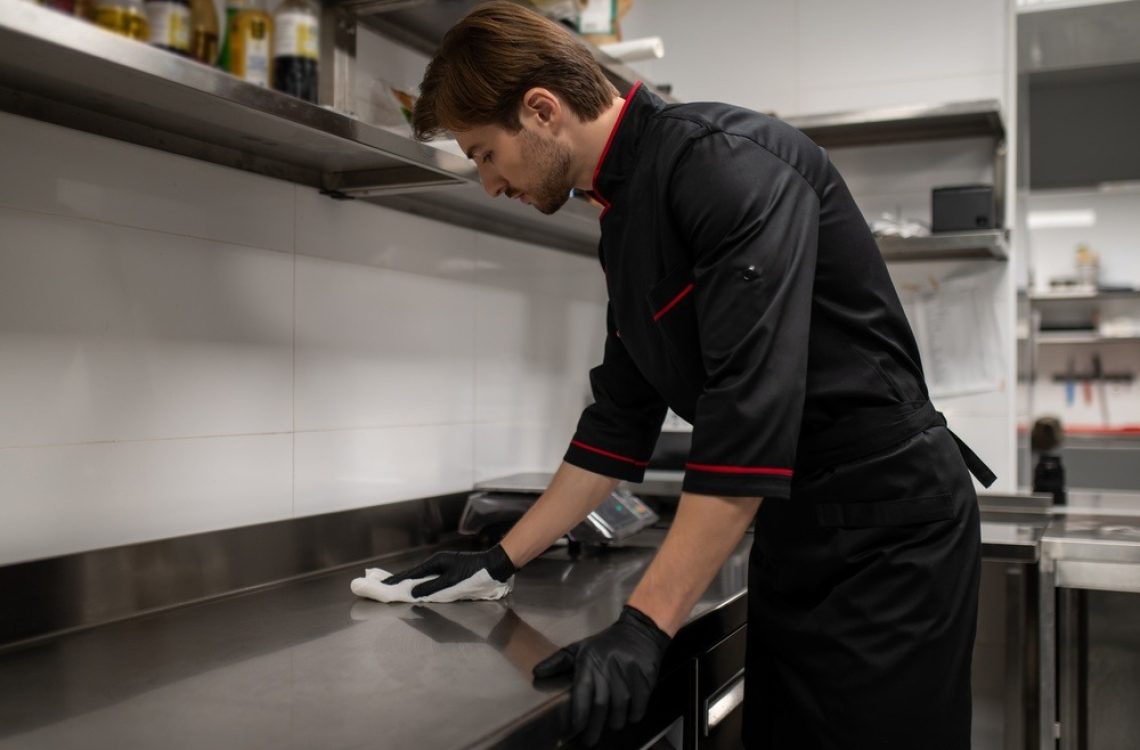
Cleaning and Disinfection of Surfaces
Countertops, utensils, cutting boards, and machinery must be cleaned and disinfected regularly to prevent dirt accumulation or contamination between foods.
In professional kitchens, it is common to establish specific daily cleaning protocols and periodic controls to guarantee optimal conditions.
Proper Food Preservation
Keeping food at the correct temperature is essential to prevent bacterial growth. Refrigerated or frozen products must be stored according to the corresponding guidelines and always respecting the cold chain.
It is also important to monitor expiration dates and properly organize food storage.
Separation Between Raw and Cooked Foods
Cross-contamination is one of the main risks in the kitchen. For this reason, raw and cooked foods must be handled separately, using different utensils and surfaces.
This measure helps prevent bacteria present in raw foods from transferring to prepared or ready-to-eat products.
Use of Appropriate Clothing and Personal Protection
Kitchen professionals must wear specific work clothing, hair coverings or tied-back hair, and maintain proper personal hygiene throughout the working day.
In addition, any worker showing symptoms of illness or infections should avoid direct food handling.
Food Hygiene in School Cafeterias
In school cafeterias, hygiene measures become even more relevant due to the volume of meals prepared daily and the specific needs of students.
For this reason, school food services operate under strict food safety, temperature control, cleaning, and food handling protocols. All of this helps guarantee safe, balanced menus adapted to each educational center.
The correct application of these rules not only helps prevent health risks, but also forms part of the commitment to quality and student wellbeing.
The Importance of Training in Food Hygiene
In addition to having suitable facilities and cleaning protocols, staff training is essential to maintaining high hygiene standards.
Kitchen and cafeteria professionals must be familiar with good food handling practices, preservation systems, and cleaning and disinfection procedures. Constantly updating this knowledge helps improve safety and adapt to current regulations.
At Central Borne, we work to provide a school food service based on quality, food safety, and attention to every detail, guaranteeing safe and healthy environments in schools and educational centers